
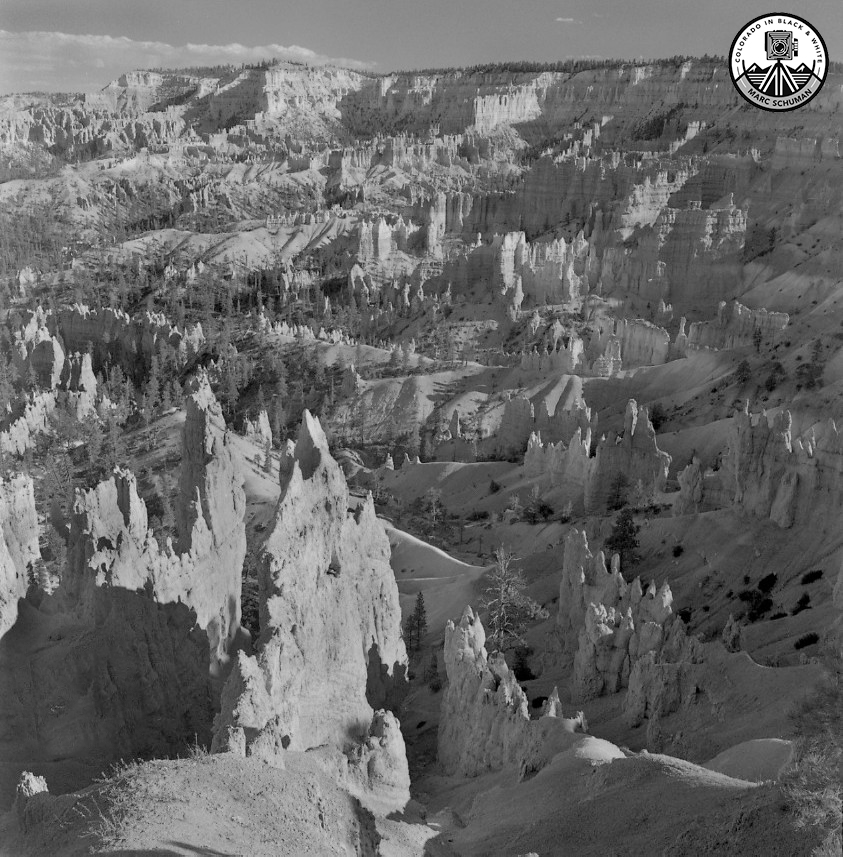
When dawn’s first light caresses Bryce Canyon, the landscape stirs—not in color, but in whispers of shadow and contrast. Here, the earth’s contours emerge like whispered secrets, sculpted by light’s tender embrace and darkness’s quiet touch. In the realm of Utah landscape photography, it is this dance between light and shadow that breathes life into black-and-white images, turning stone and sky into poetry framed by your lens.
Here’s walking into poetry –
Embracing the Drama: Sunrise and Sunset Shadows on Bryce’s Terrain
At sunrise and sunset, Bryce Canyon reveals its soul in chiaroscuro—the sharp, profound contrast between light and shadow carving hoodoos into statues of mystery. Shadows stretch long, casting silent stories across the rugged terrain. To capture this fleeting theater, you must:
- Arrive before dawn, linger after dusk—chasing the subtle shifts of light
- Harness the Zone System to balance highlights and shadows with precision
- Frame the natural curves and lines where shadow guides the eye like a gentle hand
- Use low ISO and narrow apertures to preserve every whisper of detail
- Seek vantage points where the interplay of light sculpts the landscape anew
Could the very absence of color reveal the canyon’s deepest truths? What stories hide in the folds of shadow, waiting to be told through your lens? Much like black and white landscape photographs New Mexico, these moments in Bryce invite you to see beyond the visible—to feel the silent pulse beneath the stone.
The Psychology of Black-and-White Imagery: Tone as Emotion
Black-and-white strips the world to its emotional skeleton. Without color, each tone carries a weight, a feeling. High contrast stirs excitement, mystery, or even melancholy; soft midtones soothe the soul. Shadows hold secrets—inviting reflection, solitude, or awe.
Marc Schuman, a master of this craft, says it best: “The essence of a black-and-white photograph lies in its ability to invite the viewer to imagine, to feel beyond the literal.” Schuman’s work draws you close, enticing you into a conversation with light and shadow, where every nuance counts.
Shadows as Storytellers: Using Tonal Range to Craft Narrative
In Bryce’s shifting light, shadows do not merely fall—they narrate. They tell of time’s slow march, the land’s quiet endurance. How do you translate this eloquence into a single frame? Here are ways to let shadows speak:
- Capture side-lit textures that sing in relief and depth
- Isolate a single hoodoo in shadow to reveal its grandeur and loneliness
- Layer shadows to build mystery, inviting the viewer to wander deeper
- Soften harsh contrasts with long exposures, crafting a gentle mood
What if the true art of Utah landscape photography lies not in revealing everything, but in what the shadows choose to conceal? A silent invitation to your imagination.
A Hopeful Vision Through Fine-Art Prints
To preserve these moods beyond the moment, a fine-art print becomes your canvas—where light, shadow, and tone converge in timeless harmony. Classical techniques like the Zone System and darkroom mastery ensure each print carries the canyon’s soul intact.
When these prints hang in your space, they do more than decorate—they breathe, shift, and whisper new moods as the day moves on. In every gradient of gray, there is hope—hope that these captured moments of contrast and shadow will inspire, soothe, and connect.
Last Thoughts
By embracing contrast and shadow in Bryce Canyon, you craft more than images—you create stories that echo through time. Your Utah landscape photography becomes a bridge to nature’s quiet grandeur, a silent poem for all who pause to look.
Are you ready to invite this poetic world into your home? To feel the silent stories of Bryce’s shadows captured forever in fine-art black-and-white prints? Let’s create those moments together.