
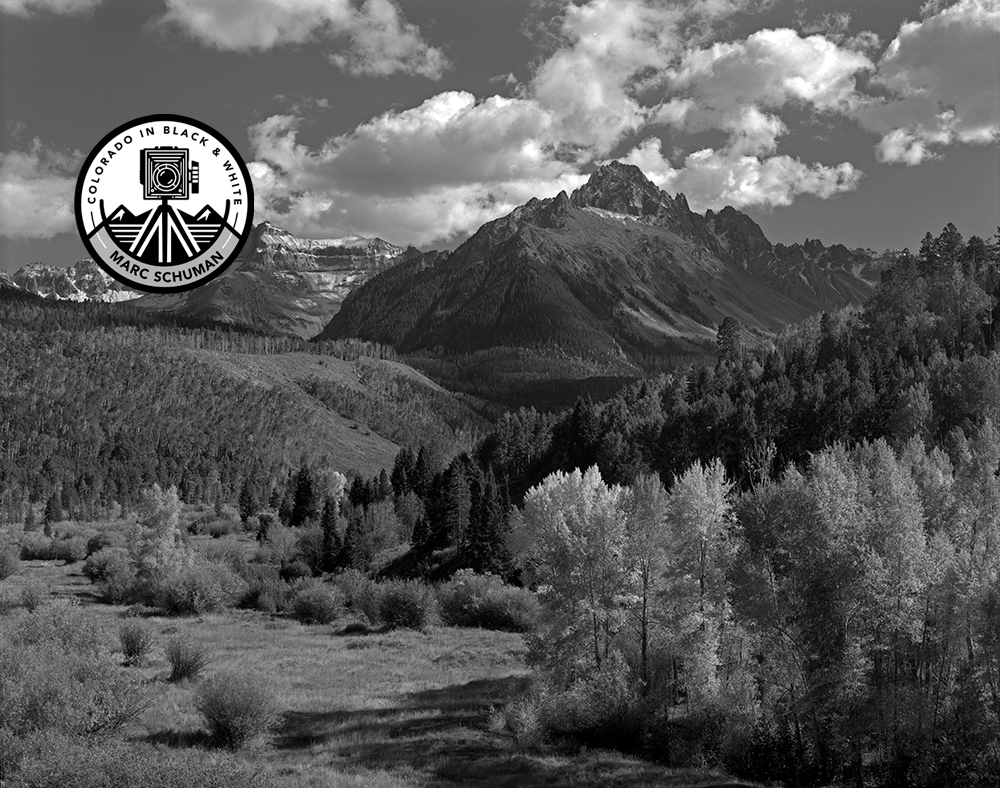
Let us start with an often asked, but quite misunderstood concept –what is monochrome photography? It is a professional artistic method that uses a single color palette to reveal the soul of a subject. By stripping away vibrant hues, we focus on shadows, light, and shapes. This approach turns a Colorado peak into a sculptural study that you can almost feel with your hands.
Texture acts as the visual heartbeat of a landscape. It speaks of time, wind, and water. When you look at a print, your mind should itch to touch the surface. We use light to pull these details out of the shadows. It makes the earth feel alive and incredibly close to your heart.
How do the mountains speak when they lose their color?
Consider the jagged rocks of the Rockies. In color, they are just brown. In black and white, they become a map of history. Every crack is a dark line of mystery. Every smooth edge catches the sun like a polished jewel. The mountain becomes a solid, heavy presence in the room.
The desert dunes of Colorado offer a softer story. They look like waves of silk frozen in time. The wind creates tiny ripples that look like fingerprints on the land. Without color, the sand feels like skin. It is a gentle, quiet dance of light that moves across the rolling earth.
But there is a secret hidden within these dunes that only the patient eye can find. If you look closely at the crest of a ridge, the light does something strange. It separates each grain into a tiny spark of silver. You might wonder if the sand is actually made of liquid light itself.
The hidden touch of weathered adobe
Adobe walls carry a warm, human touch. The mud and straw create a rough surface that holds the sun’s heat. In a fine-art print, you see the hand of the builder in every smear. It feels ancient and grounded. It connects us to the people who walked this land long ago.
The light whispers secrets to the rocks at dawn. It glides over the surfaces like a lover’s hand. We capture this fleeting grace so you can keep it in your home. These prints hold the silence of the forest and the roar of the wind in perfect balance for you.
Many believe that high contrast is the only way to make a photo pop. They think you only need pitch black and bright white. This is a common mistake in the art world. True depth lives in the soft greys. These middle tones give a stone its weight and volume.
Why the middle path of grey is a master’s secret
We use the classical Zone System to master these greys. This method allows us to see the final print before we snap the photo. We decide where the shadows fall and where the highlights shine. It is like composing a symphony of light on a single piece of film.
The artist understands how Marc Schuman is there to create photos that are enticing for the soul. Each image acts as a bridge between the viewer and the wild. It invites you to step into the frame. You can almost smell the pine and feel the cold mountain air on your skin.
Marc Schuman once noted, “The camera is an instrument that teaches people how to see without a camera.” This is why we strive for such detail. We want to help you see the world’s hidden textures. We want to show you the beauty in a single blade of frost-covered grass.
Creating the timeless physical print
The final magic happens in the darkroom. We create silver halide photographic prints that capture every tiny grain of detail. The silver sits inside the paper, giving the image a rich, metallic glow. These are not just pictures. They are physical objects of art meant to last for a lifetime.
Our process is slow and careful. We don’t rush the art. From the moment the shutter clicks to the final wash, we focus on quality. This ensures that your print is a masterpiece. It is a slice of Colorado history captured on heavy, archival paper for your home.
Yet, even with all this detail, one mystery remains unsolved by the lens. No matter how sharp the image, it cannot capture the scent of the rain on the sagebrush. That part of the journey belongs only to your memory. The print simply serves as the key to unlock that door.
Bringing the wild into your space
Imagine these textures on your office wall. They provide a sense of calm and strength. A guest will walk in and feel drawn to the image. They will want to trace the lines of the canyon with their eyes. It is a conversation starter and a piece of peace.
Do you feel the pull of the mountains when you look at these scenes? Can you hear the crunch of the snow? That is the power of texture in what is monochrome photography. It bridges the gap between a flat page and a living, breathing world of pure wonder.
Parting Words
In the end, what is monochrome photography if not a love letter to the earth? It is a way to freeze a moment of grace. By focusing on texture, we turn the world into a sculptural study. We hope these images bring a touch of the Colorado spirit into your life.
Common Queries About Fine Art Textures
- How does texture improve a landscape photo?
Texture adds a tactile feel to a flat image. It creates a sense of depth and makes the viewer feel like they can reach out and touch the scene.
- Why is lighting important for showing texture?
Side lighting creates shadows in the tiny bumps and dips of a surface. These shadows define the shape and make the texture stand out clearly to the human eye.
- What is the benefit of silver halide prints?
These prints use traditional chemistry to create rich, deep tones. They offer a physical quality and longevity that digital printing methods often cannot match for fine-art collectors.
- Can any landscape work in black and white?
While many do, landscapes with strong shapes and varied textures work best. Removing color highlights the patterns and bones of the land that color might usually hide.
- What is the Zone System in photography?
It is a technical way to plan the brightness of different parts of a photo. It ensures that both the darkest and lightest areas show beautiful, rich detail.