
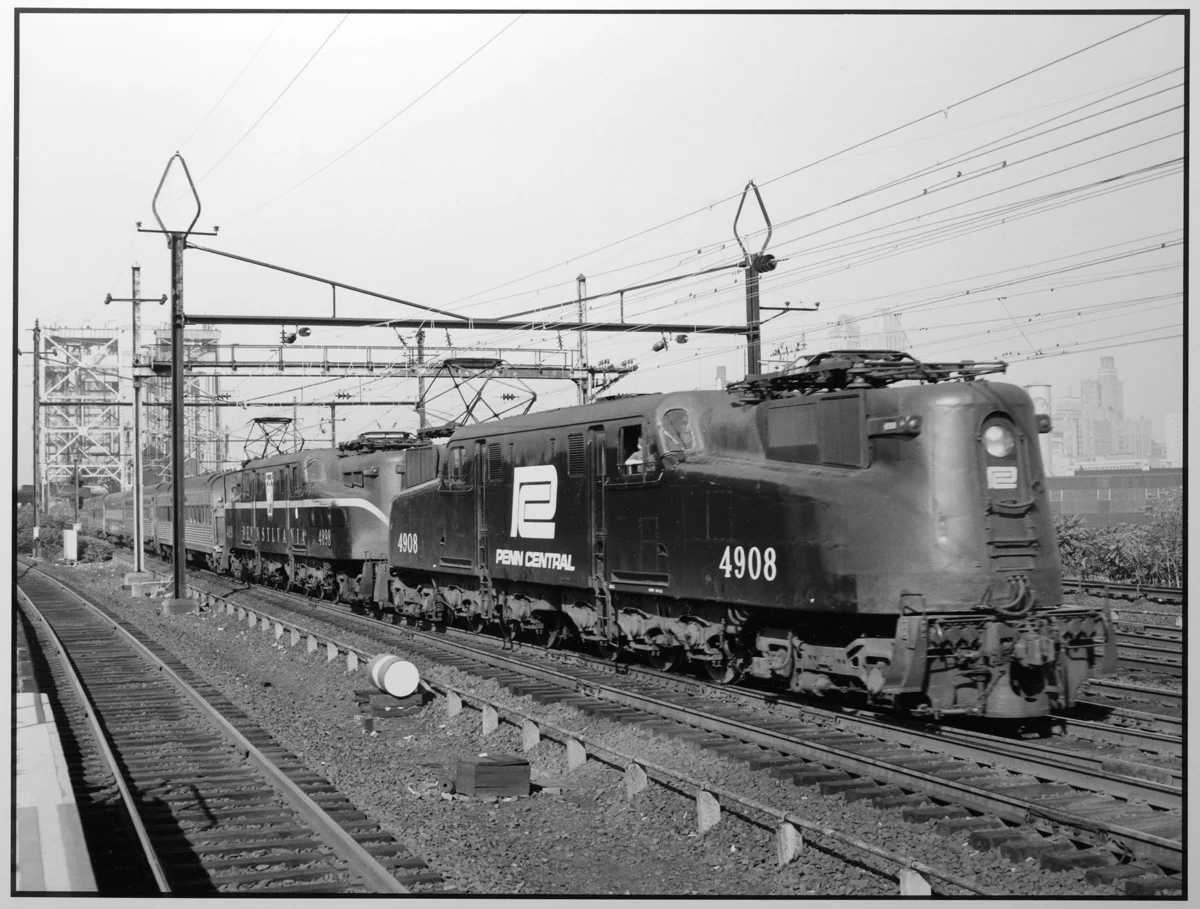
When light strikes iron, it doesn’t just reflect—it remembers.
It murmurs through the patina and welds, unfolding into something sacred.
This isn’t merely a photograph—it’s a transfiguration.
In the quiet brilliance of large format black and white photography, machines like the C&O E‑8 #4024 are reimagined as cathedrals of motion and memory. The very metal seems to speak—etched with time, shadow, and grace.
But what makes these mechanical giants such ideal muses for monochrome? And why does scale matter so much? Let’s delve deeper…
Why Trains Belong to Monochrome
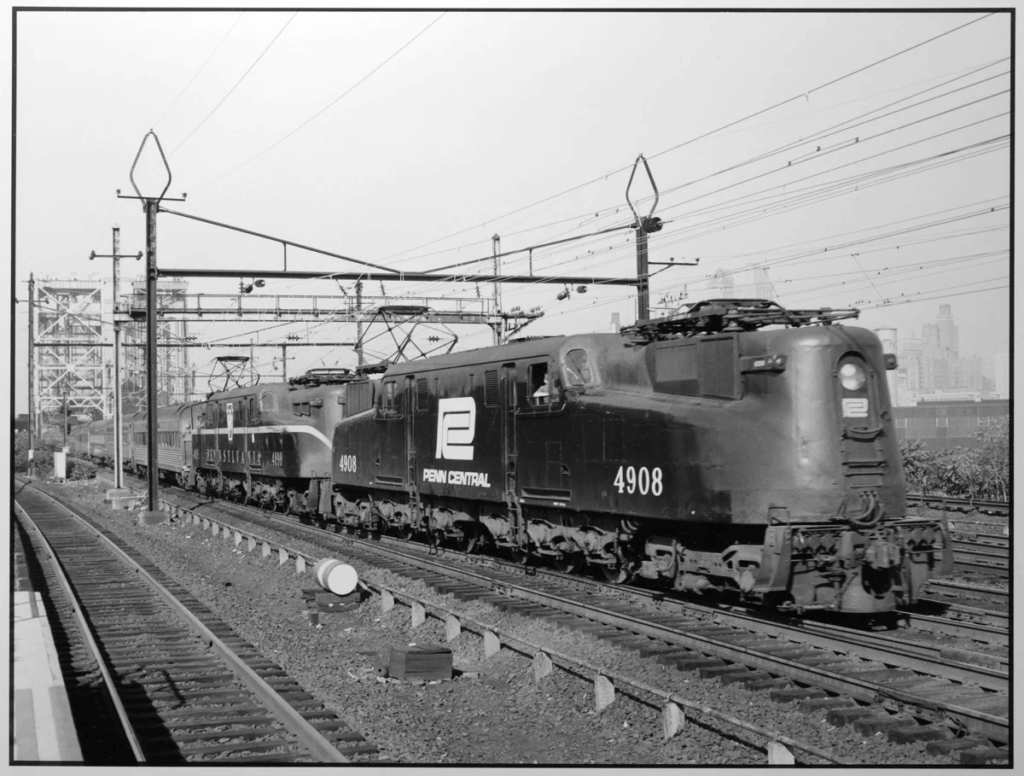
Mechanical subjects—especially locomotives—come alive in black and white. When color is stripped away, what remains is pure form: rivets aligned like constellations, shadowed vents that breathe, and frames that echo industrial poetry.
Geometry becomes language. Texture becomes voice.
Trains carry contrast in their bones. The polished curve of a coupling rod. The rust-softened grille. The grit-gloss interplay of light and machine. In monochrome, every surface reveals its story.
Still wondering why this matters in print?
(How does large format preserve those stories? Stay with me.)
The Detail Advantage: Why Large Format Matters
With large format black and white photography, size becomes your ally. An 8×10 negative or high-resolution scan draws out detail invisible to the naked eye—paint cracks like veins, weathered plates, embossed numbers, the subtle rise of grease-laced steel.
These are not simply pictures. They’re documents of existence. And in large-scale prints, the locomotive no longer just appears—it commands.
As a noted fine art photographer puts it:
“Large format lets us hear what surfaces whisper. It doesn’t just document the object—it interprets its silence.”
And yet the story of surface is only half told…
(How does light complete it? Let’s look at tonality.)
Light, Steel & Tonal Grace: The Soul of the Photograph
Photographing a locomotive is like chasing starlight trapped in steel— light dances along the rivets, pools in shadowed vents, and glides across curves like a memory etched in chrome.
Every tonal decision is a dialogue. Do you let the boiler gleam or allow it to fade into dusk? Does the ladder cut sharply across the frame or melt into middle gray? Techniques like the Zone System, precise metering, and careful filtering help preserve this balance.
Yellow filters bring clarity to the sky and silhouette. Red adds cinematic intensity. But exposure is no science—it’s emotion metered in stops.
A Moment in the Darkroom: Print as Ritual
Picture this: the print of C&O E‑8 #4024 lies submerged in the developer tray. In the hush of the darkroom, shadows rise first—deep and mysterious. Then the fine lines emerge, the ghost of the train coming to life. Rivets become ridges. Steel breathes.
This is no casual creation. It’s ritual. It’s patience, paper, and presence.
It’s what Marc Schuman lives for—crafting fine-art photographs that are not just visually stunning but enticing, tactile, and timeless. Just for those of you who wish to get a better insight into this photograph, it is available in the ink jet prints format. So, when do you intend to take a look at it?
Print Scale & Presence: How Size Shapes Emotion
A locomotive in large format doesn’t just sit in a gallery—it occupies it. In a 20×24 print, the C&O E‑8 #4024 becomes immersive. From a distance, the train feels architectural. Up close, it feels intimate.
Each bolt a breath of history,
each shadow a footnote of motion,
stillness humming with what once thundered through the rails.
Why This Still Matters—And Always Will
In a world awash with color and speed, black and white trains offer something precious: stillness with gravity. They invite pause. They reward attention.
For collectors, decorators, and lovers of steel and silence, large format black and white photography delivers not just imagery—but atmosphere. Emotion. And connection.
So when you next stand before a fine-art train print, don’t just look.
Listen. The metal may still be humming.