
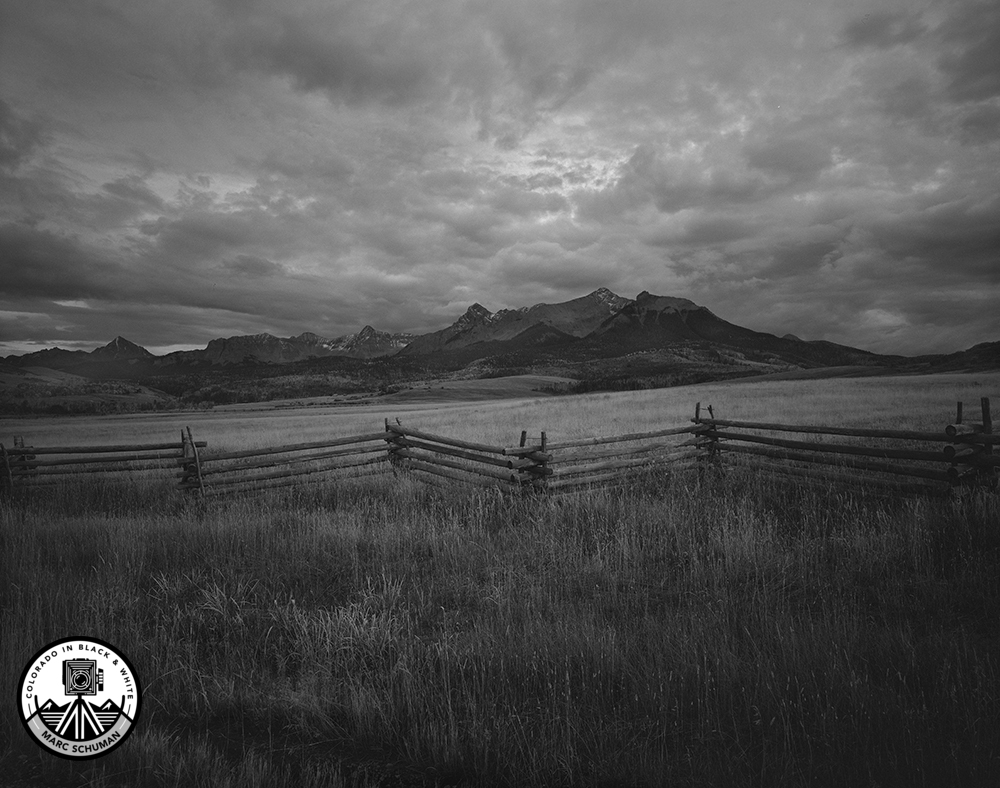
A black-and-white photograph can look impressive on a screen and still fail to hold a room. The difference is often revealed in the print. Silver halide fiber prints have a physical presence that reproductions rarely achieve: deep, responsive blacks, luminous highlights, and a surface that carries the decisions made from exposure through final finishing.
For collectors, this is not a nostalgic preference for an older process. It is a choice to live with a photographic object made with patience, judgment, and materials chosen for their visual character.
What Makes Silver Halide Fiber Prints Different
A silver halide print begins with a photographic negative, not a digital file sent directly to a printer. Light passes through the negative onto traditional photographic paper coated with light-sensitive silver halide crystals. In the darkroom, the image is developed, stopped, fixed, washed, and carefully dried. Each stage affects the final print.
Fiber-base paper has a paper support beneath its photographic emulsion. It differs from resin-coated paper, which is designed for speed and convenience. Fiber paper requires longer processing and more careful drying, but it rewards that effort with a tactile surface, exceptional tonal subtlety, and a visual depth that suits serious black-and-white work.
The process is not automatic. A printmaker may alter exposure, contrast filtration, burning, dodging, and development to bring the negative to its fullest expression. A storm-darkened ridge may need more weight at the edges. Snow on a distant peak may need restraint so it remains bright without losing detail. These are not corrections applied by default. They are printmaking decisions.
The Value of Medium and Large Format Film
The quality of a darkroom print begins long before the enlarger is switched on. Much of the work shown by Colorado in Black & White is made with medium and large format photographic equipment, selected for the clarity and deliberate pace these cameras require.
A medium format negative records substantially more information than a 35mm frame. Large format film goes further still, offering a negative measured in inches rather than millimeters. When enlarged as a silver halide fiber print, that information appears as finely described rock, weathered wood, moving water, cloud structure, and the quiet transitions of open sky.
Equally important is the discipline of the camera itself. A large format camera is not carried casually into a scene and fired from the hip. It is set on a tripod. Composition is considered on a ground glass. Camera movements can control perspective and plane of focus. Exposure is measured with care. The method slows the photographer down and asks a more useful question: what, precisely, is this image about?
That deliberation is especially well suited to the landscapes of Colorado and the American West. A broad valley, an abandoned railroad structure, or a solitary tree has room to assert its form when the negative is made with patience. The eventual print preserves not just detail, but intention.
Tonal Range You Can See Across a Room
Black-and-white photography depends on relationships. The strength of a print is rarely found in pure black or pure white alone, but in the many tonal steps between them. Fiber-base paper is admired for the way it renders those transitions. Shadow can remain rich without becoming empty. Highlight can feel bright while retaining texture. Midtones can describe stone, grass, water, and weather with remarkable ease.
This matters in a home, office, or hospitality setting, where a photograph is seen under changing light and from different distances. From across a room, a well-made fiber print holds its structure. Up close, it offers more to examine: the grain of the film, the edge of a distant cloud, the texture in an old locomotive or a weathered pier.
The character of the negative remains central. Medium and large format film provides a generous foundation for those tonal relationships, particularly in larger prints. Rather than relying on artificial sharpness, the image can retain natural detail and graceful gradation. The result is descriptive without becoming clinical.
Why Handmade Prints Belong in a Collection
A silver halide fiber print is produced one at a time. That fact carries practical implications. Fiber paper must be processed thoroughly so residual chemistry does not compromise its long-term stability. It must be handled carefully when wet, then dried and flattened with attention to presentation. The work takes longer than a modern automated print process because it is fundamentally different work.
There are trade-offs. Fiber prints can have slight surface variation, and the handmade process means no two prints are mechanically identical. For collectors, those qualities are part of the appeal. They confirm that the print is an original photographic interpretation, not a generic decorative product reproduced in unlimited volume.
The choice also depends on the image and the intended setting. Some photographs are well served by a carefully produced inkjet print, particularly where a particular scale or paper surface is desired. But when the image was conceived on film and calls for the full tonal language of a traditional darkroom, silver halide fiber paper remains difficult to surpass.
Choosing a Print for Your Space
Consider the subject first, then the viewing distance and wall size. A large-format mountain landscape can sustain a substantial print because the negative contains both expansive structure and fine detail. An intimate study of railroad machinery, wildlife, or a nautical scene may reward closer viewing and a more modest scale.
Black-and-white work is unusually adaptable to interiors. It can complement warm wood, stone, contemporary architecture, historic spaces, and restrained modern furnishings without competing for attention. Its lack of color does not make it neutral. It directs attention toward light, form, texture, and mood.
For a collector, the most satisfying choice is often the photograph that continues to reveal itself. Look for an image whose atmosphere feels right at first glance, then study the tonal architecture beneath that first response. A fine print should have enough presence to anchor a wall and enough quiet complexity to remain compelling over time.
A silver halide fiber print asks to be seen in person. Its depth cannot be fully reduced to a thumbnail or even a well-calibrated display. Under real light, on a wall where life happens around it, the photograph becomes what it was intended to be: a lasting record of looking carefully.