
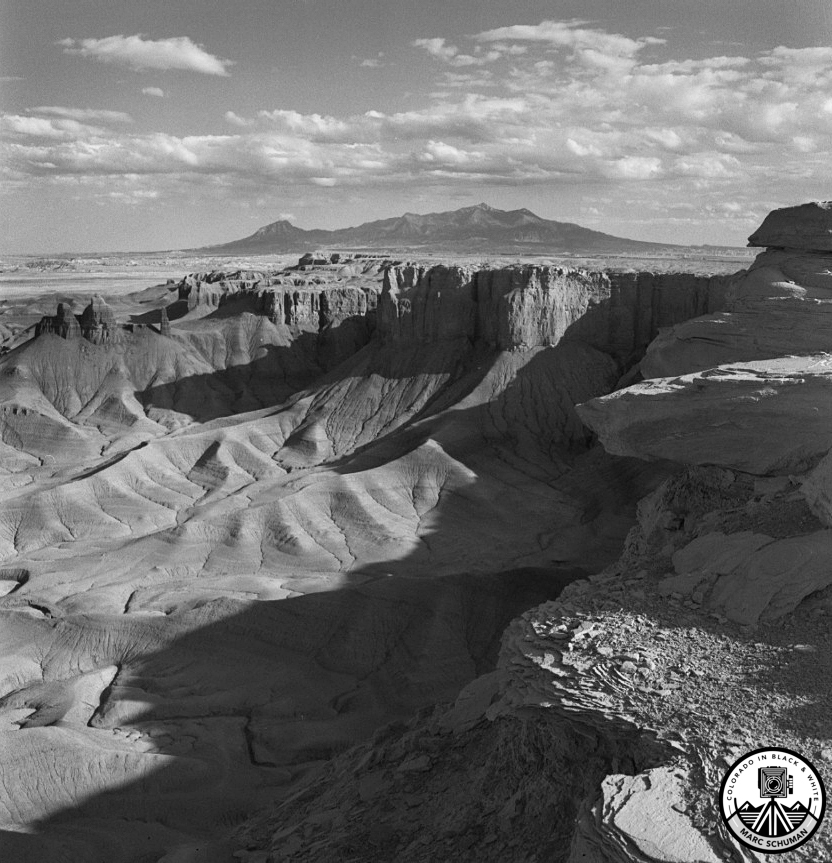
A silver print of a Utah ridgeline does not begin when it reaches a wall. It begins with weather, light, a carefully chosen viewpoint, and the deliberate setup of a camera that asks the photographer to slow down. Analog photography remains meaningful because it preserves that chain of decisions. The finished print carries evidence of attention, from the exposure on film to the final balance of blacks, grays, and whites in the darkroom.
For collectors and discerning buyers, this is more than a distinction in process. It is part of what makes an original photographic print feel present in a room. A well-made black-and-white photograph can hold the texture of weathered wood, high-country snow, steam from a passing locomotive, or the broad silence of an open western plain without relying on color for its effect.
What Analog Photography Sees Differently
Film is not simply an older way to make pictures. It is a medium with its own visual language. Black-and-white film records light with a long, graceful range of tones, particularly in highlights and shadows. When exposed and developed with care, it can preserve subtle detail in bright clouds while maintaining the weight of dark rock, forest, water, or shadow.
That range matters in landscapes and historical subjects, where visual character often lives between pure black and pure white. A darkroom print gives the photographer direct control over those relationships. Exposure time, paper choice, filtration, localized burning, and dodging all shape the final image. These are not automated corrections. They are considered printmaking decisions, made one print at a time.
Digital photography can produce extraordinary work, and it offers clear advantages in speed, flexibility, and low-light capability. But speed is not always the point. Film encourages a more measured approach to composition. Before the shutter is released, the photographer must decide what the image is about, where the light will fall, and which details deserve emphasis. That discipline is visible in a finished print.
The Role of Medium and Large Format Cameras
Much of the finest black-and-white landscape work is made with medium and large format equipment. These cameras are not selected for convenience. They are selected for the negative they produce and for the discipline they require.
A medium format negative is significantly larger than 35mm film, allowing for exceptional detail, smooth tonal transitions, and a strong sense of depth in a print. It is particularly well suited to subjects with rich surface character: sandstone, rail lines, old structures, water, snow, and the layered terrain of the American West. The larger negative also allows a photograph to be printed at substantial sizes while retaining a calm, natural quality.
Large format cameras take this process further. The photographer works beneath a dark cloth, examines the image upside down on ground glass, and composes with great care. Camera movements can adjust perspective and control the plane of focus, allowing a building, railroad scene, or receding landscape to be rendered with precision that is difficult to achieve by other means.
The trade-off is time. A large format camera is slower to carry, slower to set up, and less forgiving of hurried work. Wind, changing light, and uneven ground all become part of the calculation. Yet those limitations can be productive. They demand patience and reward observation. A photograph made with this equipment is often the result of returning to a location, waiting for conditions, and making only a small number of exposures.
From Negative to Finished Print
The negative is not the photograph in its final form. It is the score from which the print is performed.
In traditional darkroom printing, a negative is placed in an enlarger and projected onto light-sensitive photographic paper. The printer determines the overall exposure, then refines particular areas of the image. A bright sky may need additional exposure to reveal its structure. A shadowed foreground may need gentle restraint so that its texture remains visible. Small changes can alter the emotional center of a print.
Silver halide fiber-base paper has a distinctive presence. Its surface, depth, and tonal response are different from a mechanically reproduced image. Properly processed and finished, it is an enduring photographic object, made for collectors who value the material character of the work as much as the subject itself.
Selected inkjet prints also have a place when the image and presentation call for them. High-quality pigment printing can offer excellent detail, scale, and permanence. The important question is not whether one method is universally better. It is whether the printing process serves the image honestly and is carried out to a demanding standard.
Why Handmade Prints Matter in a Finished Space
Mass-produced wall decor is designed to fill a space. An original photographic print is made to hold one.
The difference is often felt before it is explained. A carefully printed black-and-white photograph has visual restraint. It can work with modern interiors, traditional architecture, mountain homes, offices, hospitality spaces, and institutional collections because it does not compete for attention through color. Instead, it brings structure, atmosphere, and a sense of place.
For an interior designer, a large print can establish a room’s visual anchor. For a homeowner, it may become a lasting connection to Colorado, the West, railroading history, or a landscape that has personal meaning. For a collector, the appeal includes provenance: the knowledge that the image was made and printed by an artist working deliberately within a defined craft.
Scale should be chosen with care. A broad landscape often benefits from room to breathe, while an intimate detail of weathered architecture or wildlife can become more powerful at a smaller size. Paper surface, framing, surrounding light, and viewing distance all influence the result. The best choice depends on the image and the space, not a formula.
A Slower Way of Looking
The lasting value of analog work may be its refusal to rush. Film asks the photographer to look longer. Darkroom printing asks the artist to evaluate every tone. The finished photograph asks the viewer to do the same.
That exchange is especially fitting for black-and-white imagery. Without color to direct the eye, form, light, texture, and timing carry the picture. A cloud crossing a mountain face, a line of rails disappearing into distance, or the weathered side of an old building becomes more than a record of a place. It becomes an arrangement of values and shapes, made meaningful through careful seeing.
Colorado in Black & White is built around that belief: photography deserves the time required to make an image and print it well. The result is not merely a picture of a subject. It is a finished work with weight, tonal character, and the quiet authority of a process practiced by hand.
When choosing art for a wall, consider not only what the photograph shows, but how it was made. The patience behind the image may be the very thing that allows it to remain compelling long after the room around it has changed.